


What is a high speed cutter used for?
You rely on a high-speed cutting machine when you need fast, accurate results on tough materials. In industries like aerospace and automotive, you often process titanium, high-strength steels, aluminum alloys, and composites.
- The F11 high-speed cutting machine handles these demanding tasks with ease, ensuring clean cuts and precise finishes.
Key Takeaways
- High-speed cutting machines deliver fast, precise cuts on tough materials, boosting productivity and reducing costs across industries like aerospace, automotive, and jewelry making.
- These machines handle various tasks such as cutting, shaping, engraving, and finishing with high accuracy and smooth results, adapting easily to metals, plastics, wood, and composites.
- Using advanced technology, high-speed cutters improve efficiency, maintain tight tolerances, and offer flexibility for both large production runs and detailed custom projects.
Main Functions of a High-Speed Cutting Machine
Cutting and Trimming
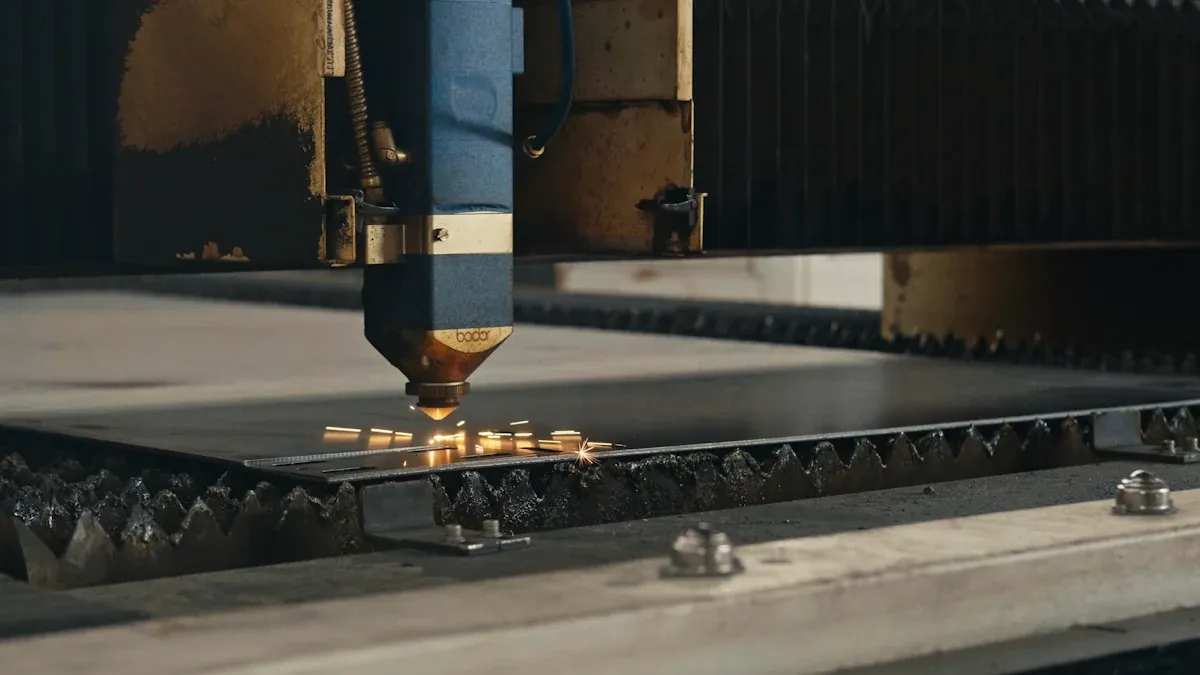
When you need to cut and trim materials quickly and accurately, a high-speed cutting machine delivers unmatched performance. You can process metals like stainless steel, aluminum, brass, and titanium with ease. These machines achieve high material removal rates, which boosts productivity and reduces manufacturing costs. You benefit from advanced spindle technologies and robust machine structures that support high-speed operations. Efficient chip evacuation systems help maintain tool life and ensure clean cuts.
Here’s what you can expect when using a high-speed cutting machine for cutting and trimming:
- Achieve high production efficiency, processing thousands of sheets per minute.
- Maintain precision within millimeters or less for superior product quality.
- Adapt to various materials and thicknesses, including metals, plastics, and composites.
- Reduce burr formation through rapid and clean shearing of material.
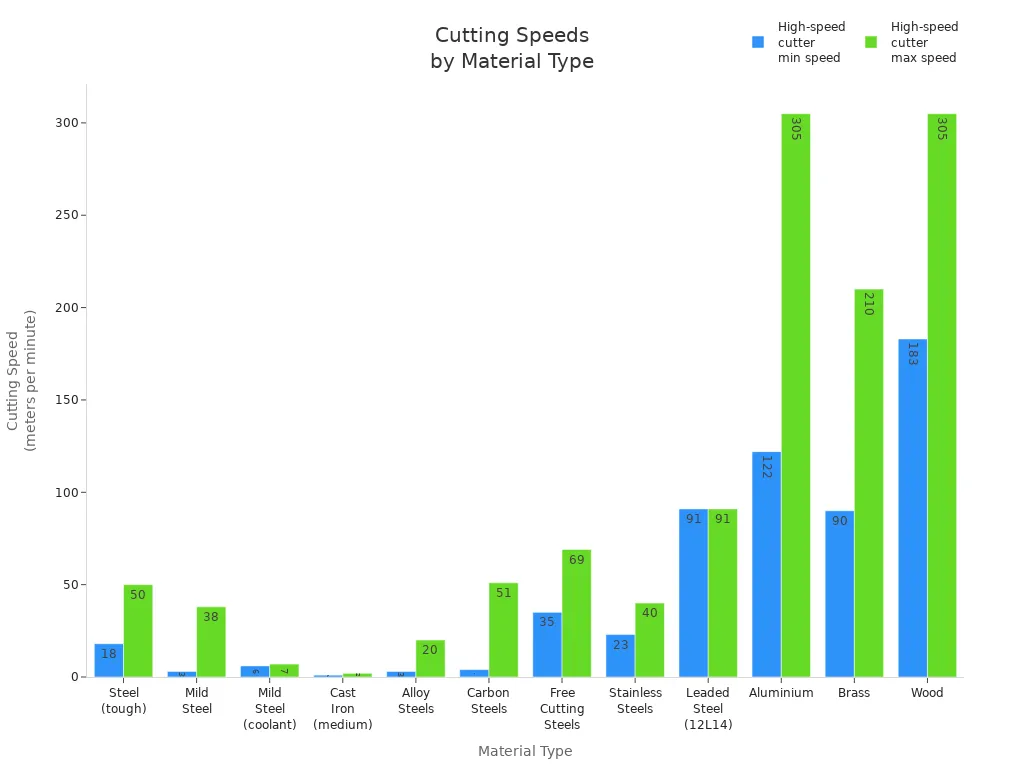
You can see how cutting speeds vary across materials in the table below:
| Material Type | Cutting Speed Range (meters per minute) |
|---|---|
| Steel (tough) | 18–50 |
| Mild Steel | 3–38 |
| Cast Iron (medium) | 1–2 |
| Alloy Steels | 3–20 |
| Carbon Steels | 4–51 |
| Stainless Steels | 23–40 |
| Aluminium | 122–305 |
| Brass | 90–210 |
| Wood | 183–305 |
Shaping and Carving
You can use a high-speed cutting machine to shape and carve intricate designs in metal, and plastic. In woodworking, you create complex profiles, decorative edges, and mouldings with precision. Machines like shapers, panel routers, and radial arm routers allow you to control cutting speed and depth, giving you flexibility for detailed work.
Common shaping and carving tasks include:
- Detailed carving and engraving
- Accessing hard-to-reach areas
- Creating flat bottom cuts and flat surfaces within carved areas
- Leveling and surface smoothing
- Rounding edges and detailed work
You improve efficiency and quality by using various carbide burr shapes, which enhance precision in carving and profiling.
| Machine Type | Common Shaping and Carving Tasks |
|---|---|
| Shaper | Creating complex shapes and profiles, shaping edges, mouldings, decorative designs |
| Panel Router | Creating detailed and decorative edges, controlling cutting speed, using various router bits |
| Radial Arm Router | Edge profiling, shaping, grooving, intricate designs, adjustable cutting angles and depths |
Engraving and Detailing
You rely on high-speed cutting machines for engraving and detailing tasks that demand accuracy and fine control. Laser engraving technology lets you remove material layer by layer, producing fine lines and intricate designs. You can achieve shallow etching for delicate patterns or deep engraving for durable industrial markings. Advanced machines offer 3D engraving, which creates multi-dimensional, textured images popular in jewelry and luxury products.
Tip: Use laser engraving for permanent, high-contrast, and tactile marks on metals, plastics, and glass.
Industry-standard machines, such as hybrid and fiber laser markers, provide high-quality, legible engravings with increased depth of focus. You benefit from automatic position adjustment and full field auto-focus, which ensure consistent results across different materials.
| Feature/Model | 3-Axis Hybrid Laser Marker MD-X Series | 3-Axis Fiber Laser Marker MD-F Series |
|---|---|---|
| Laser Type | Combination of fiber laser and YVO4 laser | High output fiber laser |
| Precision and Detail | High-quality, delicate marking with increased depth of focus | High-speed marking and deep engraving with "Deep Dig" 3-Axis focus |
| Speed and Output Power | High peak power for fast cycle times | Extremely high output power for rapid deep engraving |
| Industry Applications | Aerospace, automotive, medical device manufacturing | Heavy machinery, defense, industrial manufacturing |
| Special Features | 3-Axis control, full field auto-focus, automatic position adjustment | IP-64 rating, maintains focus during deep engraving |
| Material Compatibility | Metals and various materials | Metals and harsh environments |
| Marking Quality | Precise, durable, legible engravings | Permanent, tamper-proof markings with high precision |
Finishing and Smoothing
You achieve superior surface finishes with a high-speed cutting machine, especially when using climb milling techniques. This method minimizes chip recutting and ensures smoother cutting action, resulting in cleaner passes and fewer surface imperfections. Efficient chip evacuation and reduced tool deflection contribute to a polished finish, making these machines ideal for finishing operations on softer materials.
High-speed cutting machines, particularly CNC milling machines, optimize cutting speed and feed rate to produce smoother surfaces. You reduce tool wear and vibration, which minimizes surface imperfections and enhances dimensional accuracy. These optimized parameters often eliminate the need for secondary finishing processes such as polishing or grinding.
| Cutter Type | Finishing Application | Industries |
|---|---|---|
| End Mills | Detailed profiling, slotting, contouring with fine surface finishes | Aerospace, Automotive |
| Face Mills | Machining large flat surfaces with smooth finishes | Automotive, Heavy Equipment |
| Ball Nose Cutters | 3D contouring and machining complex curved surfaces with smooth finishes | Aerospace, Mold Making |
| Fly Cutters | Machining large flat surfaces with fine, smooth finishes | Aerospace, Automotive |
Note: Selecting the right tool material and coating, such as high-speed steel or carbide with TiN or AlTiN, is critical for achieving the best finishing results.
Metalworking with High-Speed Cutting Machines
You rely on high-speed cutting machines to process metals with precision and speed. Industries such as automotive, aerospace, and shipbuilding demand accurate cutting for components made from mild steel, stainless steel, aluminum, and titanium. You achieve tight tolerances, often within ±0.1 mm for thin materials, which is essential for high-performance parts.
| Metal Category | Common Metals Processed with High-Speed Cutting Machines |
|---|---|
| Ferrous Metals | Mild steel, stainless steel, carbon steel, alloy steel, specialty steels |
| Nonferrous Metals | Aluminum, copper, nickel, magnesium, titanium, brass, bronze, precious metals |
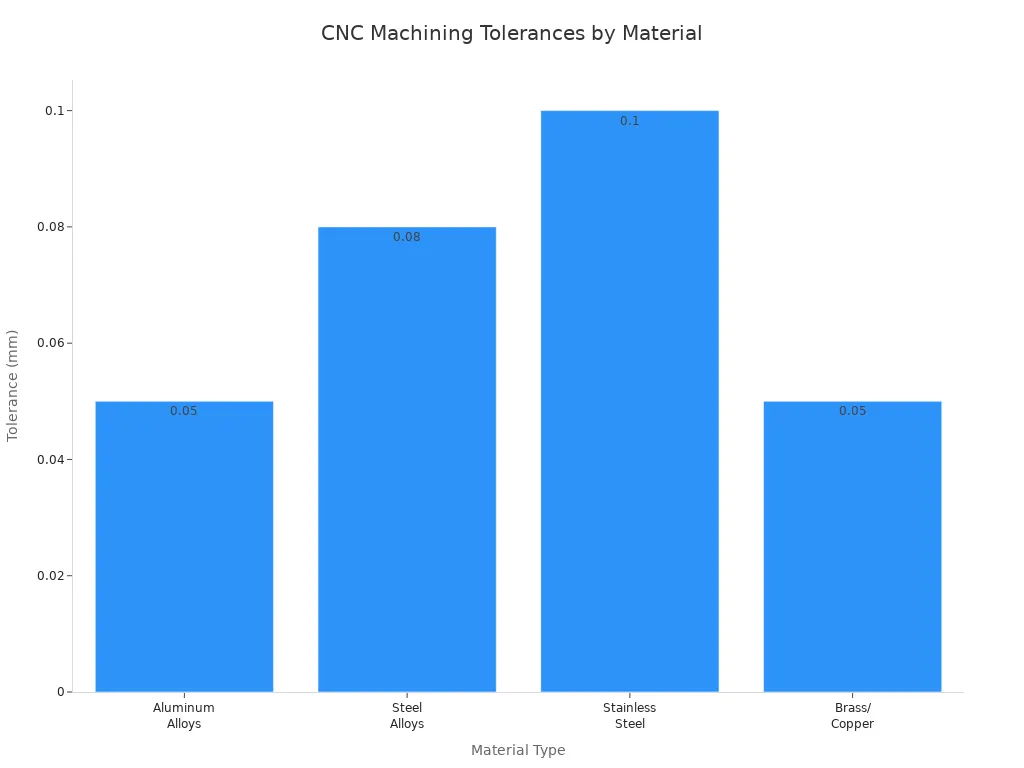
You see these machines in automotive manufacturing, where they produce precise sheet metal body elements. Aerospace applications require high precision and speed for metal components, while military and construction industries use them for armored plates and structural steel.
Note: Tighter tolerances require slower speeds and advanced equipment, especially for complex geometries.
Plastics and Composite Materials
You process a wide range of plastics and composites using specialized high-speed cutting machines. Oscillating knives work well for foam boards and honeycomb panels. Pneumatic knives handle hard materials like PTFE and rubber boards. Milling knives cut acrylic, MDF, and PVC efficiently.
You benefit from machines designed for technical fabrics, carbon fiber, and fiberglass. Specialized tooling, such as diamond-coated end mills, improves cutting performance and extends tool life. You must manage challenges like heat buildup and tool wear by optimizing cutting parameters and using cooling techniques.
Tip: Use chipbreaker cutters and diamond coatings for fiber-reinforced composites to maintain accuracy and reduce tool changes.
Jewelry Making and Fine Detailing
You achieve ultra-precise cutsin jewelry making with high-speed cutting machines, especially Laser Cutters. These machines allow you to create delicate filigree, lacework, and monograms. You produce intricate ring patterns, engraved bracelets, and hollow earrings withmicron-level accuracy.
- Laser cutting enables mass production and cost efficiency.
- You get polished edges without extra finishing.
- Auto-focus laser heads and precise motion control systems ensure consistent results.
Long shank ball carbide burs help you navigate tight spaces and add fine details to delicate pieces.
Advantages of Using a High-Speed Cutting Machine
Speed and Efficiency
You gain a major advantage with a high-speed cutting machine: rapid production. These machines operate at cutting speeds 5 to 10 times faster than traditional tools. You can finish each part in less than half the time. For example, a typical cycle time drops from 20 minutes to just 8 minutes. This speed means you produce more parts per hour and reduce downtime. Automated features, such as auto-loading and intelligent CNC control, further boost your output. You also save energy and lower costs because you spend less time on each job.
| Factor | Traditional Machining | High-Speed Machining |
|---|---|---|
| Cycle Time (per part) | 20 minutes | 8 minutes |
| Parts Produced per Hour | 3 parts | 7 parts |
| Operational Efficiency | 70% | 95% |
| Downtime per Shift | 1 hour | 15 minutes |
| Annual Output | 5,760 parts/year | 13,440 parts/year |
Tip: Faster cutting means you can handle both large production runs and urgent custom orders with ease.
Precision and Control
You achieve outstanding accuracy with high-speed cutting machines. Advanced laser and CNC technologies let you reach tolerances as tight as ±0.0001 inches. This level of control is essential for industries like aerospace, automotive, and medical device manufacturing. You avoid material deformation and get smooth, clean edges, even on complex or thin-walled parts. Automated systems and smart software help you maintain consistent quality, reducing the risk of human error.
| Machining Method | Achievable Precision / Tolerance | Industries / Applications |
|---|---|---|
| Swiss Machining | ±0.0001 inches | Medical, Aerospace |
| Multi-Axis CNC Machining | Extremely close tolerances | Aerospace, Molds |
| Waterjet Cutting | Tight tolerances, no heat-affected zones | Metals, Plastics, Composites |
| Micro-Machining | Micrometer range tolerances | Micro-electronics, Medical Devices |
Versatility for Different Materials
You can process a wide variety of materials with a high-speed cutting machine. These machines adapt to metals like stainless steel, aluminum, copper, and even highly reflective materials. You also cut plastics, composites, and technical fabrics. Features like tunable beam quality and dynamic laser control let you optimize settings for each material and thickness. Assist gases and high-power options help you achieve clean cuts on thick or tough materials. Robust construction and smart controls ensure reliable performance across all your projects.
- Process metals, plastics, composites, and fabrics
- Adjust cutting parameters for different thicknesses and material types
- Use advanced features like dynamic beam control and assist gases
- Maintain high precision and speed, no matter the material
Note: This versatility supports both mass production and custom jobs, making your workflow more flexible and efficient.
- You gain speed, precision, and flexibility when you choose the right cutter for your project.
- High speed cutters support your work in industries from manufacturing to jewelry.
- You improve efficiency and achieve better results with advanced tools, including a high-speed cutting machine.
FAQ
What safety precautions should you follow when using a high-speed cutter?
Always wear safety goggles and gloves. Secure your material before cutting. Keep your hands away from the blade. Follow the manufacturer's instructions for safe operation.
Can you use a high-speed cutter on glass or ceramics?
You should avoid using high-speed cutters on glass or ceramics. These materials can crack or shatter. Specialized tools work better for these applications.
How do you maintain a high-speed cutting machine?
- Clean the machine after each use.
- Inspect and replace worn parts regularly.
- Lubricate moving components.
- Check alignment and calibration for accurate results.
